Hidden Costs of Self-Hosted Agent Infrastructure vs Cloud Agent Platforms
Staffing and isolation costs often outweigh self-hosting's apparent price advantage.
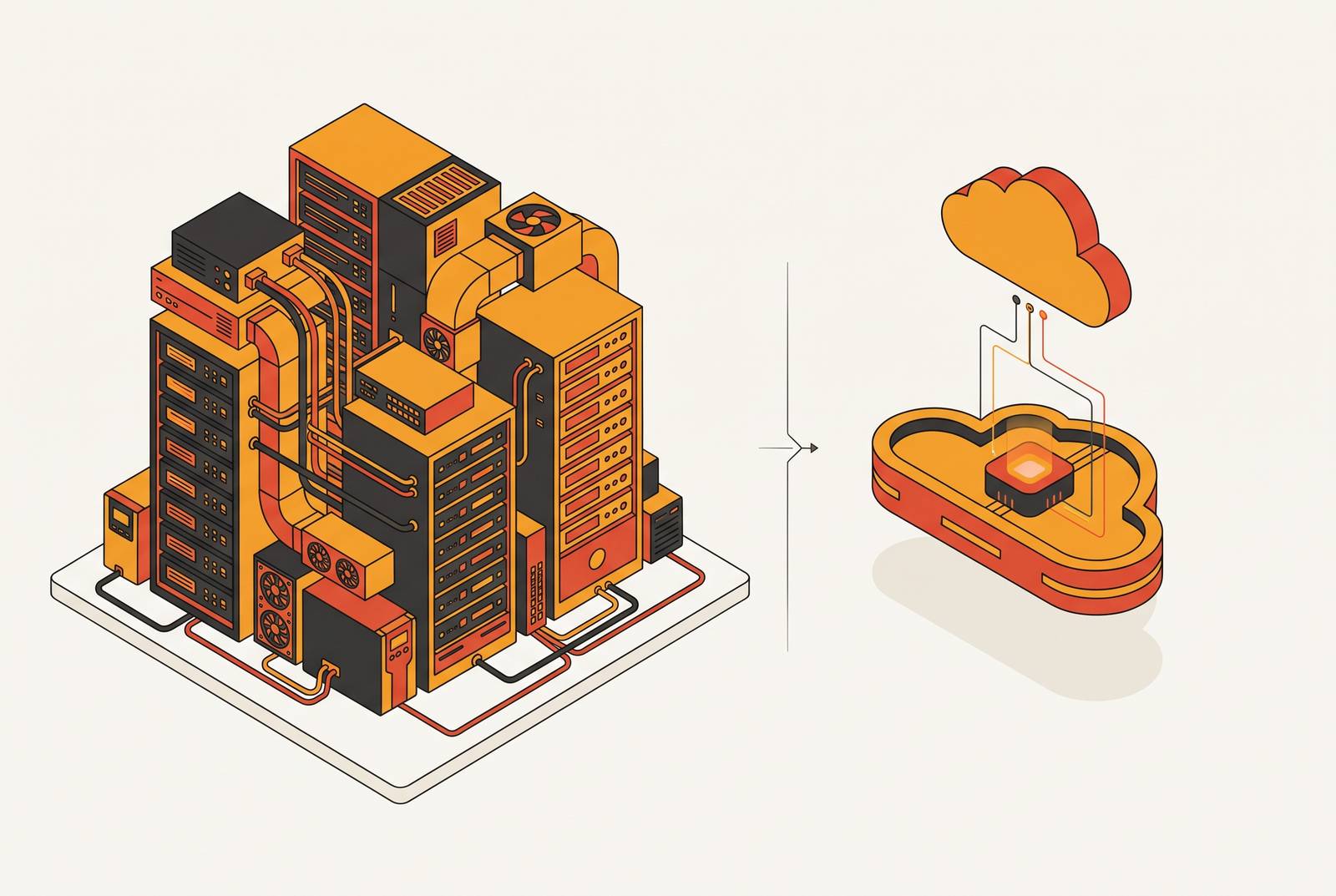
A bring-your-own API key cloud coding agent runner lets teams run Claude Code or Codex with their own Anthropic or other provider’s API key without having to manage the infrastructure that runs it. The cost comparison must include that environment alongside model usage and hosting fees. Whether self-hosted infrastructure costs less than a managed cloud platform depends on the staff who keep it running, isolation, idle capacity, and maintenance.
Why the sticker price comparison between self-hosted and cloud agent platforms is the wrong starting point
Cloud platforms charge per token, per seat, or per run, while teams that choose self-hosting pay for fixed infrastructure and the work to keep it running. Monthly fees therefore compare only part of the service. At low-to-mid volumes, the visible prices can look close enough to justify self-hosting before anyone has priced the engineering work behind it.
The price of a server does not cover a reliable agent environment, and a platform subscription may leave some usage charges to be paid separately. A useful comparison assigns both options the cost of delivering the same capability. Otherwise, apparent savings can simply represent work that has moved from a vendor invoice into an existing engineering budget.
What self-hosted agent infrastructure actually costs to stand up
Hardware acquisition includes more than the GPU itself. An integrated system includes chassis, processors, RAM, NVMe arrays, redundant power supplies, and high-speed networking cards. Networking adds a separate capital expense through ConnectX-7 InfiniBand adapters and associated Quantum-2 switching gear. These components belong in the initial deployment budget.
The execution environment requires a distinct engineering project. Agents need sandboxed contexts that prevent their work from spilling into production infrastructure. An agent asked to analyze a CSV might fork indefinitely, attempt outbound connections to unknown hosts, or write gigabytes to disk. Owning the hardware does not give teams any of the isolation they need.
Renting cloud GPUs changes this starting point by replacing hardware acquisition with rental charges. Renting compute can leave responsibility for the agent environment with the team, a distinction from buying a managed agent platform that keeps the rental quote separate from the complete operating cost.
The ongoing costs that appear only after infrastructure is running
Power and cooling become recurring, metered expenses once owned hardware starts operating. Their cost changes with utilization. Compute billing is only the starting point. Depending on the architecture, data egress, inter-AZ bandwidth, and high-throughput persistent storage such as EBS io2 or FSx for Lustre add further obligations across self-managed and cloud GPU deployments.
Maintenance adds staffed work to those metered costs. OS patching, runtime updates, security monitoring, backup verification, and crash troubleshooting all require engineering time. As new models ship, teams also have to keep evaluating and deploying them. Managed platforms handle the work their service covers, while self-hosted teams have to look after their own stack.
Larger open-weight models such as Llama 3.3 at 4-bit quantization need tens of gigabytes of unified memory or VRAM, plus substantial host RAM for agent state backends. That prerequisite belongs specifically to the local-model option. Keeping those scopes separate avoids charging one deployment model for capabilities the other does not provide.
How cloud agent platforms generate their own surprise costs
A single idle cloud GPU VM can cost $3,000–$5,000 over a month, with further exposure as a multi-agent stack grows. Hyperscaler GPU rates also differ significantly from specialized AI cloud pricing, so “cloud” is not a single financial option.
In multi-step workflows, token use can grow at a quadratic rather than linear rate, and MCP tool definitions can add thousands to tens of thousands of tokens before any useful output begins. Anthropic explains how many tokens tool definitions can use in its engineering guidance. Polling every minute adds another source of waste, generating tens of thousands of monthly API calls for a small number of real events.
Circuit breakers, hard per-user token budgets, exponential backoff, and maximum step limits constrain runaway activity. Those controls must be built and maintained. A cloud estimate that excludes them is incomplete for the same reason that a self-hosted estimate excluding maintenance is incomplete.
Where the breakeven actually falls when utilization is factored in
How much the infrastructure is used determines how its fixed costs are spread across useful work. At low sustained utilization, specialized cloud GPU rentals remain considerably cheaper than owned or colocated hardware because they avoid upfront capital expenditure. Peak demand is not a useful substitute. A team sizing infrastructure around its busiest period pays for unused headroom during the rest of the month.
For comparison, the stated crossover is above 55–60% sustained utilization, where owned or colocated hardware reaches breakeven in 11–14 months and saves substantially across a three-year window. Their relevance depends on whether the workload sustains that utilization and whether the estimate includes the operational costs already described.
Token-volume breakeven follows a different curve from the one for hardware utilization. A runner that uses a third-party model API still incurs token charges when its execution environment is self-hosted. Most engineering teams deploying coding agents in 2026 remain below the utilization and volume thresholds where self-hosting wins on cost. But compliance rules can require self-hosting before it reaches financial breakeven.
When self-hosted infrastructure is genuinely the right answer despite the cost
Data sovereignty and regulatory requirements can limit which third-party endpoints a team can use. HIPAA obligations, EU AI Act Article 12 logging mandates, and SOC 2 Type II audits require scrutiny of the proposed deployment, including retention and inspection arrangements. Privileged legal communications, air-gapped defense work, and strict rules for financial data residency can rule out cloud services that would otherwise cost less.
Self-hosting is also justified when the threat model includes the vendor. In that case, vendor assurances do not resolve the underlying requirement for control. Sustained high-volume workloads provide a different justification when they clear the utilization and token thresholds and include operating costs. Fine-tuning, domain-specific adaptation, or non-negotiable latency SLAs can likewise require control that third-party APIs cannot provide.
Teams outside these requirements need a demonstrated financial or operational benefit to justify the additional infrastructure responsibility.
How do you run Claude Code or Codex in the cloud without managing the execution environment?
A managed runner must provide more than access to a model. Its execution environment is a separate cost and reliability variable, particularly when agents run untrusted code. MicroVMs give each workload its own kernel, while shared-kernel containers leave escape paths relevant to that risk. Retrofitting isolation into an existing framework can take multiple weeks and break integrations built around unrestricted filesystem or network access.
Dependency consistency is another source of operational cost. Installing packages at runtime on shared infrastructure brings version conflicts, build times that are hard to predict, and failures that cannot be reproduced. Pre-loading the dependency and tooling stack gets rid of that class of failures. Across Claude Code, Codex, Cursor, and Opencode, identical isolated environments also keep environment differences from distorting harness comparisons.
Cloudflare Sandboxes reached general availability on April 13, 2026. The service requires the Workers Paid plan at a $5/month base, plus active CPU at $0.000020/vCPU-second and additional memory and disk charges. Managed sandboxing still has idle-billing characteristics to account for. At low agent volume, buying it costs less than amortizing a custom KVM fleet plus a platform engineer, while high volume can reverse that comparison.
How to account for the DevOps headcount cost that self-hosted infrastructure requires
DevOps staffing is the largest hidden self-hosted cost because it often sits inside salaries already approved for other work. Routine maintenance may consume multiple hours monthly, but that is not a complete staffing estimate for a production platform. Initial sandbox infrastructure requires dedicated engineering allocation. One to two dedicated infrastructure engineers over at least six months belongs in the year-one model.
The ongoing obligation grows with the agent stack. New versions of Claude Code, Codex, Cursor, and Opencode require compatibility evaluation, behavior testing, and deployment work. Each hour assigned to this work is unavailable for product development. That opportunity cost is especially consequential when engineering capacity limits product delivery, even if it never creates a new invoice.
To calculate the staffing line, identify the engineering hours spent monthly on infrastructure management, multiply them by the fully-loaded hourly cost, and add the result to infrastructure spending. Then compare that total against the cloud platform fee for the same capability.
The measurement gap — why most teams discover the true cost after they are committed
Cost attribution fragments across budgets before anyone assembles the total. Compute appears in one report, staffing in another, and engineering time may have no deployment-specific allocation at all. Every individual expense can have been approved. The total can come as a surprise even when every purchase was expected.
Agent activity adds another layer of fragmentation. A team using Claude Code for refactors, a separate review agent, and a cloud delegate for async work has three cost streams and three billing models. Without run-level attribution, it cannot reliably connect spending to a harness, model, task type, or team member. Silent retry loops are particularly difficult to identify without run-level telemetry.
The measurement response is to attribute every run to its source integration, harness, model, and credential, then aggregate by team and task type. That makes cost per merged PR available for comparison. Building this view before choosing a deployment model gives the decision an evidence base. Building it afterward reveals costs, but only after the infrastructure commitment has been made.
A practical TCO framework for engineering leaders comparing deployment models before committing
Hardware and networking are one-time capital costs, while power, cooling, and data egress recur with usage. Sandbox construction belongs in year-one staffing. Monthly maintenance, model update evaluation, monitoring, alerting, and incident response require their own engineering allocation, with product opportunity cost made explicit.
For cloud, subscription or per-seat fees are the fixed costs, while token or run charges depend on a realistic estimate of how much agents will do. Idle compute needs a utilization estimate by agent type, and egress depends on the architecture. Cost-control engineering belongs in the comparison even when integration connectors are included or inexpensive.
Three questions then distinguish the viable options. The first is the team's realistic average utilization across a month. The second is whether compliance prohibits sending code or data to a third-party endpoint. The third is the fully-loaded cost of self-hosted engineering hours and the product work those hours would otherwise support.
What a platform can do changes those inputs as well as the subscription price. A platform providing VM-level isolation, pre-loaded dependencies, and integrations with Slack, Linear, GitHub, and GitLab removes corresponding build and maintenance obligations. For a bring-your-own API key runner, full attribution by source, harness, model, and credential also makes ongoing spending explainable. The defensible choice is the deployment that meets the team's constraints at the lowest complete operating cost, rather than the one with the smallest visible monthly fee.