Task-Scoped Billing When Multiple Engineers Share Claude Code or Codex on a Managed Platform
Teams need isolated execution environments linked to task identities to accurately bill agent work.

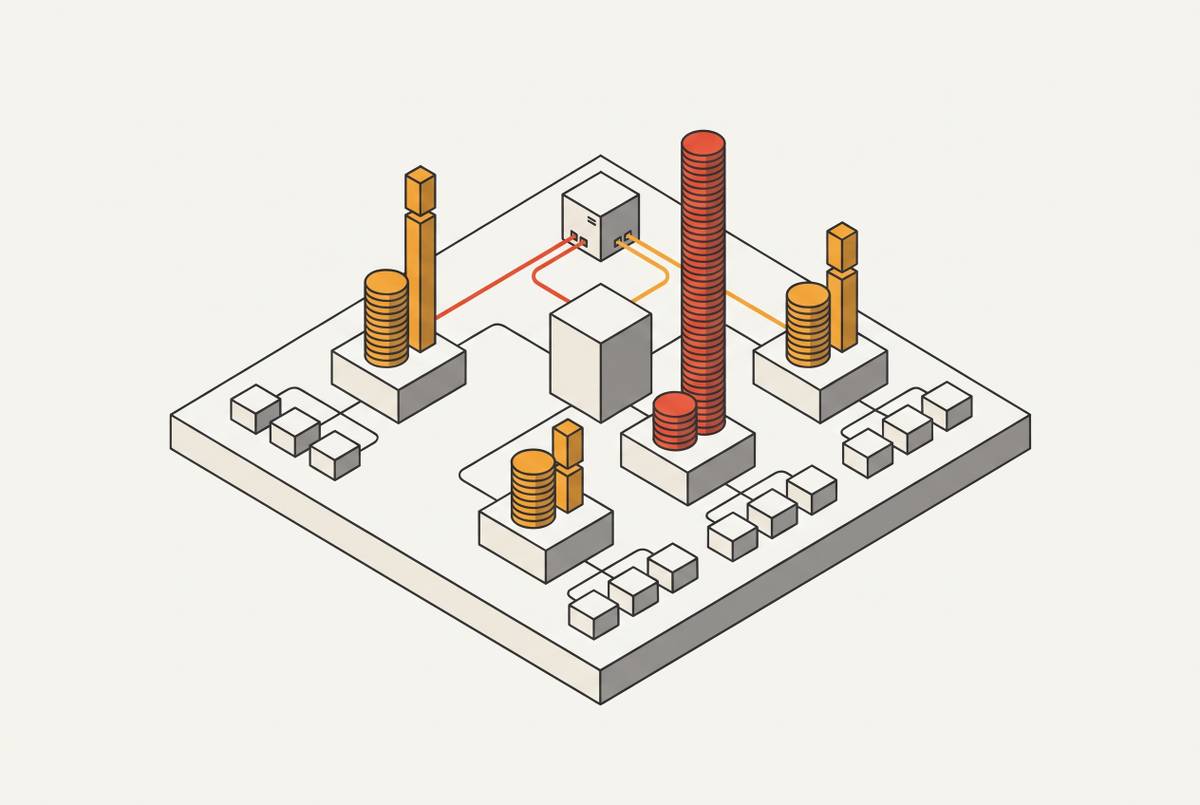
Per-run agent cost attribution for engineering teams requires tying every token to a task, the responsible engineer, and the agent that consumed it. When engineers share Claude Code or Codex through a managed platform, seat subscriptions cannot provide that accounting. Task-scoped billing needs isolated execution, a task identity recorded before work starts, and a platform that links token and runtime costs for every run that belongs to the task.
Why seat-based subscriptions break down when agents run on behalf of a team
An engineering lead can know the subscription bill without knowing which project consumed this month’s agent budget. The invoice identifies purchased access, while the work consists of asynchronous runs delegated by several engineers. Those runs may execute in parallel or continue beyond an interactive session. The seat is the wrong accounting unit.
Claude Team plans limit how much each seat and each session can use. Each member has an allocation that does not spill into a colleague’s allowance. For a team with uneven workloads, paid capacity can sit unused while other members encounter restrictions.
Multiple Claude Code instances draw from the same shared usage pool, so launching more agents does not create more subscription capacity. Teams managing automated workloads typically route them through an API workspace with its own spend limit instead. That separates a workload’s spending boundary from an individual subscription, but a workspace total still cannot explain which ticket generated the bill.
How the current Claude pricing structure handles (and mishandles) team agent usage
Claude’s plans offer different degrees of consumption visibility, but none natively produces task-level cost attribution. Team Premium includes Claude Code and lets members use much more per session than Standard. Its annual per-seat price is higher, with a higher monthly price when billed monthly. These terms describe access and allowance. They do not identify the project or ticket responsible for consumption.
The Team plan also has a maximum seat count. Organization-level pooled API credits, added October 7, 2026, cover Agent SDK and related workloads but exclude interactive Claude Code subscription usage. Pooling lets teams share credits and leaves task-level cost attribution unresolved.
Enterprise comes closer to billing for what teams use at $20/seat/month annually, with usage billed separately at standard API rates. Self-serve and sales-assisted offerings have different minimum seat requirements, and neither has a seat cap. Audit logs, SCIM, RBAC, the Compliance API, and HIPAA readiness with a BAA provide governance controls relevant to accountability. Those controls support attribution, but do not replace task identity.
Anthropic’s metering changes also show why plan boundaries need careful interpretation. On May 13, 2026, Anthropic announced separate monthly dollar credits for Agent SDK, claude -p, and Claude Code GitHub Actions. On June 15, 2026, it paused the change and returned those workloads to subscription limits. As of late October 2026, that pause remains in place.
What token consumption actually looks like when agents run at team scale
An agent’s token consumption depends on how it approaches the work. A multi-file refactor and a light task can place very different demands on an agent’s context. The same requested result can also involve different amounts of agent activity. Seat prices obscure that variation. They are a poor proxy for the cost of a particular class of work.
Fan-out makes the gap especially clear. Agent teams running in plan mode consume far more tokens than a standard session because each sub-agent maintains its own context window. The additional contexts are part of the execution strategy, even though a subscription tier does not expose their cost as a separate task-level decision. A team lead who sees only total usage cannot tell whether it came from costly delegation or from more ordinary tasks.
Anthropic’s enterprise documentation shows how much developers spend on Claude Code on average, both per active day and per month. Those averages establish that consumption is a budget item, but they conceal the distribution within a team. An engineer running background agents all day and another doing light tasks are not interchangeable units of demand. Leaders need precise spending data regardless of the amount spent. Without records for each task, leaders cannot tell whether a higher bill comes from more finished work, a different mix of tasks, or an agent strategy that uses more tokens.
How do teams attribute agent costs to each task and engineer?
Task-scoped attribution ties every token consumed to the specific task, engineer, and agent that produced it. A task has a source, such as a Linear issue, GitHub pull request, or Slack request. Each run also has an agent harness, model, and credential. These identities must be captured at run time. The task is the accounting anchor.
That anchor differs from both a seat and a session. A seat shows who has access, while a session covers one stretch of agent activity. A task may extend across several sessions, and its accounting must preserve that relationship. Records for each run give the details, and the task identity links them so the full cost can be added up.
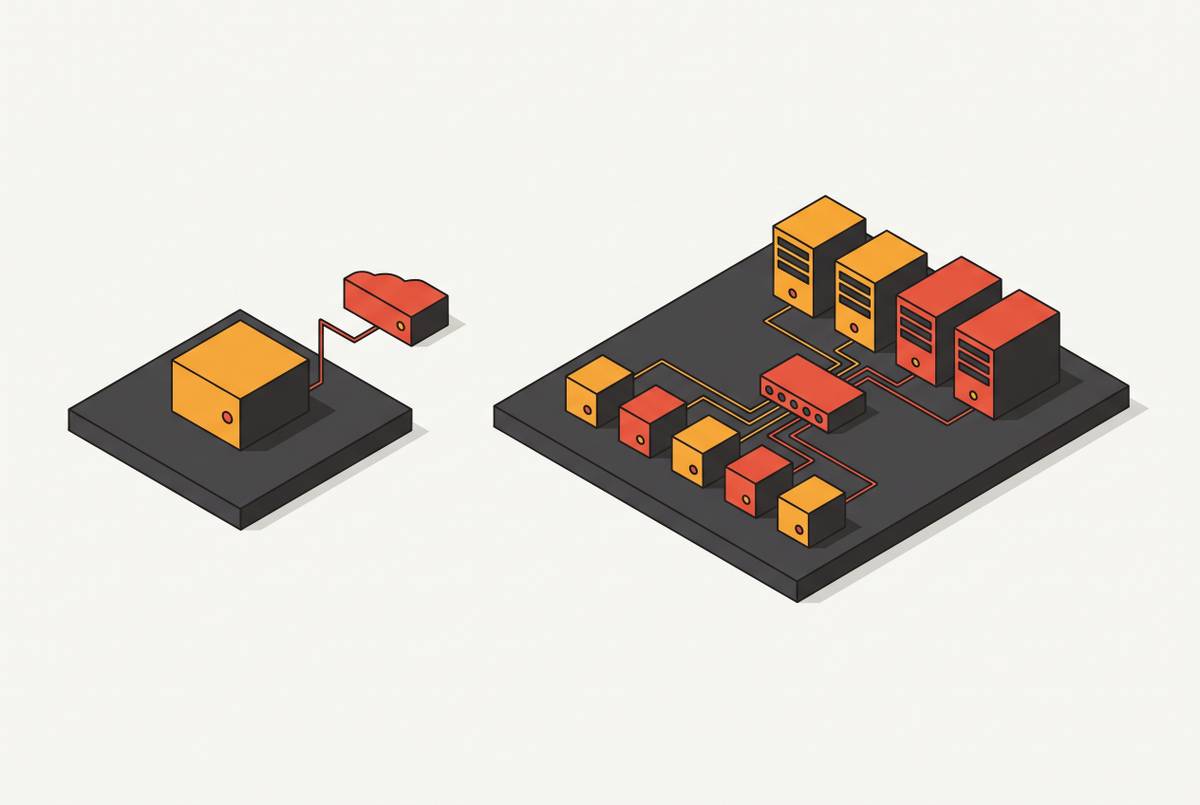
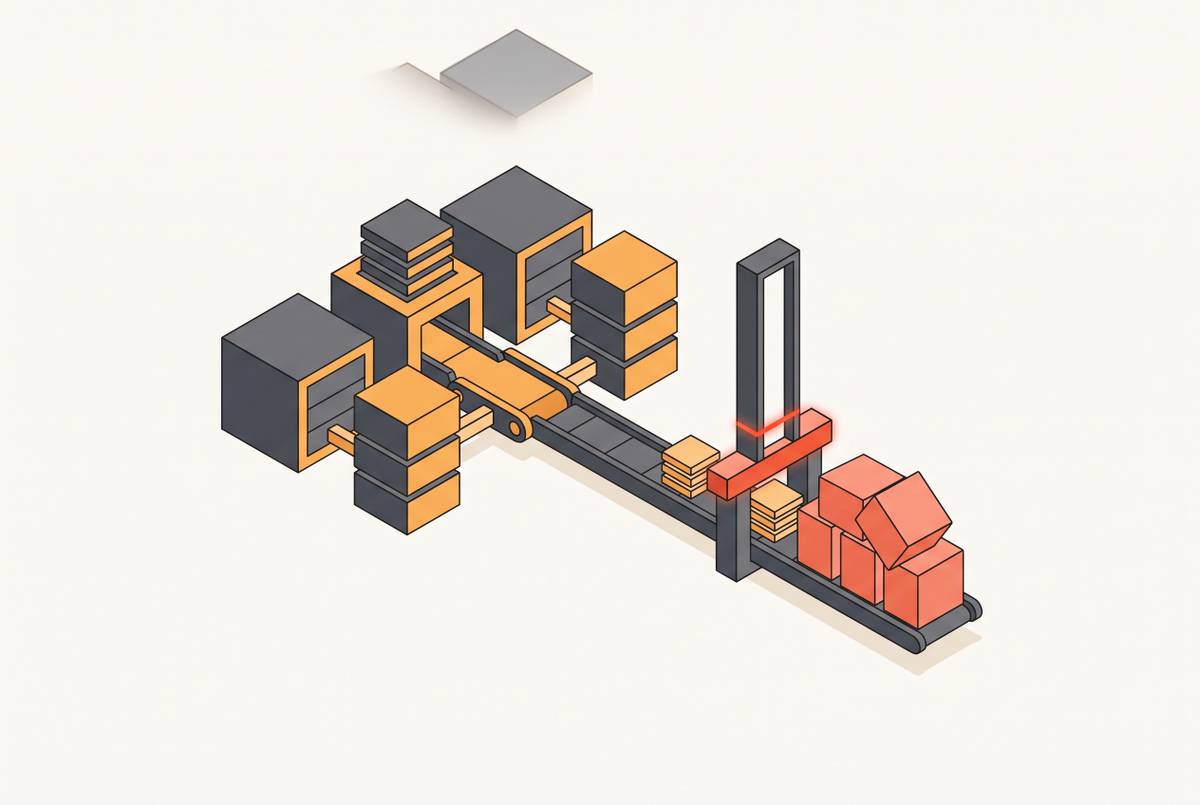
Execution isolation makes that separation practical. Each agent run needs its own sandboxed VM or container so that its resource footprint can be measured independently. When unrelated work shares an undifferentiated execution environment, a dashboard cannot recover boundaries that were never recorded. Isolation and identity must work together. An isolated run without a task label is measurable but still difficult to allocate.
Claude Code’s sandboxed Bash tool has OS-level filesystem and network isolation within boundaries the team sets. The platform above it must connect the run’s consumption to the task, responsible engineer, harness, model, and credential.
How harness choice — Claude Code, Codex, or others — affects what attribution data you can capture
The harness a team chooses affects how the work gets done and what cost data the team can see. Claude Code is a delegation agent whose file changes or pull requests map naturally to the issue that requested them. Cursor is an editor, so more of its value accrues through interactive work that is harder to assign to a single task. Neither pattern is inherently preferable. They require different attribution boundaries.
Codex supports parallel cloud tasks, with each task running in its own sandbox preloaded with the repository. Its inclusion in ChatGPT Free, Go, Plus, Pro, Business, and Enterprise describes access. A managed platform still needs to associate each run with the engineer and source task. Shared setup is not the same as shared execution, and the distinction is important when assessing isolation.
Opencode offers a different deployment profile. It is free and permissively licensed, supports more than 75 model providers, and supports multi-session use and local models. Teams with data-residency requirements can point it at local models or an internal gateway. Those options change the cost and attribution profile and still require accounting.
Subscription comparisons alone cannot resolve these differences. Opencode’s Go Teams costs $20/member, Claude Code Team plans have a higher monthly rate, and Cursor team pricing varies by seat. A harness-agnostic platform can instead compare outputs and tokens spent on the same task class across supported harnesses. That comparison answers a more useful question than which subscription has the lowest entry price.
How workflow integrations — Slack, Linear, GitHub — become the attribution surface, not just the trigger
Workflow integrations supply the task identity that makes consumption meaningful. A Linear issue, GitHub pull request, or Slack thread already names the work being delegated. The platform can attach that identity before execution begins and preserve it through reporting. The trigger becomes an accounting boundary. Engineers do not need to invent a separate label for work that already has one.
Linear agents do not use billable Linear seats, and charges from the agent vendor are separate. The issue ID can therefore anchor attribution without adding an agent seat. Linear Agent, available since March 2026, runs Claude Code or Codex in a managed sandbox using prepaid workspace credits. Its charges combine model tokens at provider rates with no markup and sandbox runtime at $0.25 per 20-minute block. The two-part meter exposes both model consumption and execution time.
How work reaches an agent still affects its costs. An issue can open directly in a coding tool, connect through Linear’s hosted MCP server, go to a cloud agent or Linear Agent, or enter a label-driven harness on team infrastructure. Each route provides a different attribution signal. The issue identity is the common anchor across them.
Developer Damian Galarza built a bash-based agent loop for CreatorSignal in February 2026 that shows how the same principle works without a managed platform. A prompt guided the agent from project orientation through a Linear issue, implementation, sub-agent review, and a pull request. Slack showed project updates, and the loop kept to one issue per session, the rule never break main, and a 15-minute blocked timeout. That explicit issue boundary made the workflow legible.
GitHub and GitLab pull requests provide an output-side receipt through the task, producing agent, and commit history that can be joined to API logs. Slack marks where work comes in through Claude Tag, whose public beta launched June 23, 2026, on Team and Enterprise plans. Because channel requests bill an organization usage balance, preserving the originating thread gives the platform a way to distinguish the work behind that shared total.
How agent memory and long-running task management affect per-task cost accounting
Long-running work breaks accounting that treats each run as a complete task. Context can persist or be reconstructed across sessions, and that consumption belongs to the work that required it. A restarted session is not necessarily new work. Without a durable task identity, the cost of a multi-session refactor becomes a collection of disconnected charges.
Claude Code has three memory primitives that differ in cost. Compaction operates on the conversation in the current window, clearing drops tool results, and memory uses external storage across windows. These mechanisms can be layered. Preserving full history can favor quality, but consumes more tokens and time than compacting it. For task accounting, that quality-versus-cost choice needs to remain visible rather than disappearing into an aggregate subscription allowance.
CLAUDE.md holds instructions and rules that developers write, while auto memory holds what Claude learns and writes itself, including build commands and debugging insights. Both contribute to the system prompt on each new session. Their recurring token overhead should be allocated to the project rather than treated as work unique to individual tasks.
Anthropic’s January 2026 Tasks update gave Claude Code filesystem-durable state, with plans stored at ~/.claude/tasks. Clearing context therefore no longer erases the overall plan. For a managed platform, that durability creates an accounting obligation as well as a usability benefit. Every contributing session must retain the task ID so that a three-session refactor rolls up to the ticket that requested it.
What engineering leaders can do now to move toward task-scoped cost control
Engineering leaders can move toward task-scoped control without waiting for a redesigned subscription model. The first step is to choose the billing structure that exposes the most consumption detail. Enterprise’s separate usage billing at API rates is the closest existing approximation to task-level accounting. For teams below 20 seats, Team Premium with organization-level API credits offers separation for eligible agentic spending. Interactive subscription usage remains outside that API pool.
The next step is to instrument delegation. Every run should begin with a named task, whether a Linear issue, GitHub issue, or Slack thread. The platform should capture the responsible engineer, harness, model, and credential before execution begins. Galarza’s loop establishes that boundary manually. A managed platform can make it part of normal operation rather than a convention engineers must reconstruct later.
Execution must then preserve the boundary. For Codex or any other harness, each run needs a sandboxed environment whose token and runtime footprint can be measured separately, rather than an undifferentiated environment shared by unrelated tasks. Long-running work also needs the same task ID across its contributing sessions.
Finally, leaders should keep a choice of harnesses and compare the results with the resources used. Running Claude Code, Codex, or other supported harnesses through the same attribution layer produces comparative data for each task class. The decision then becomes which agent delivers the better result for the tokens spent. A subscription invoice cannot answer that question. A task-linked execution record can.