Engineer-Level Run Ledgers Inside a Managed Cloud Agent Platform
Run ledgers link each agent task to its engineer, cost, and authorization.
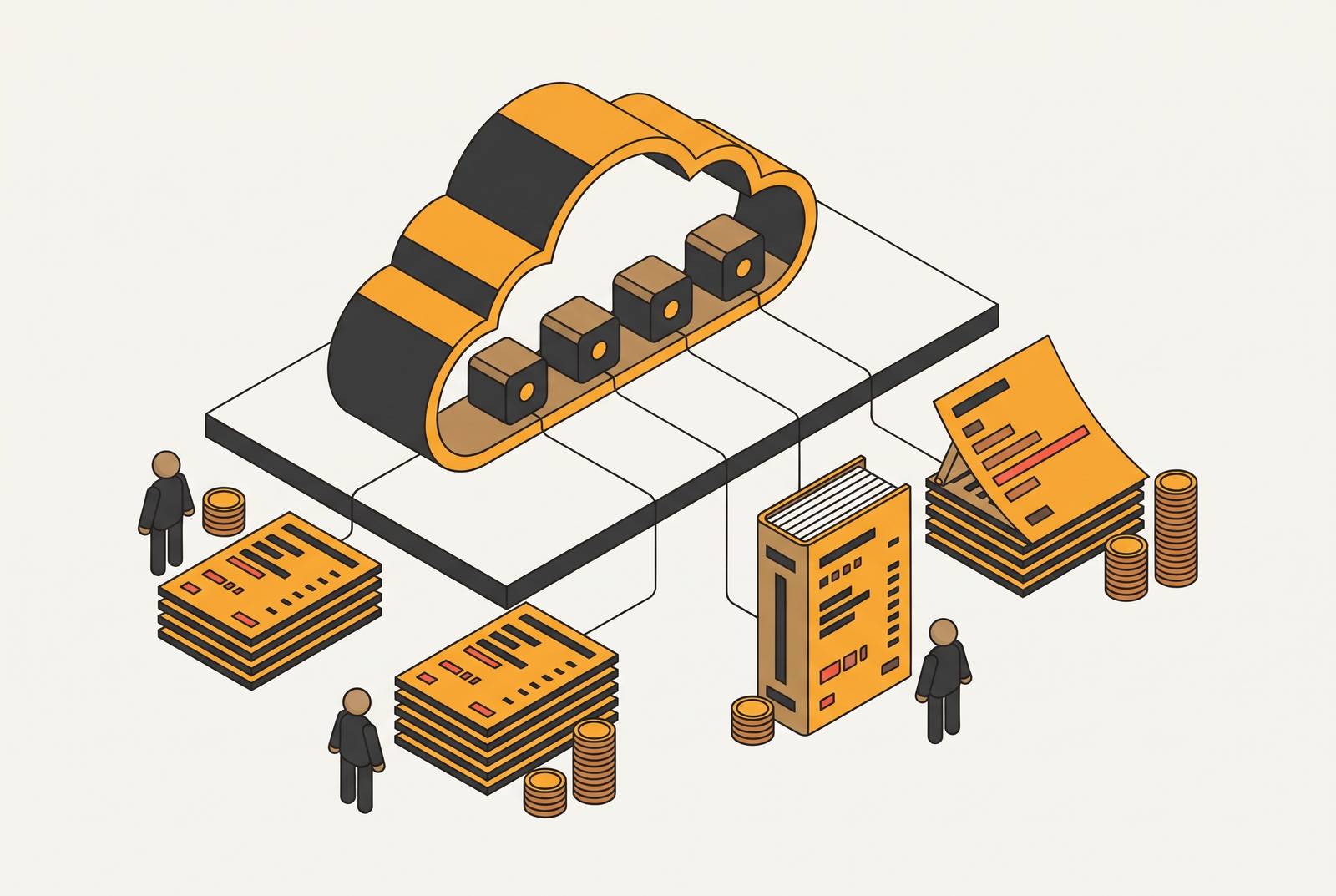
Per-run agent cost attribution for engineering teams requires an engineer-level run ledger that links each task to its initiating engineer, trigger source, harness, model, credential, duration, and outcome. Inside a managed cloud agent platform, that record connects charged time to the delegation that authorized it. Its purpose extends beyond allocating spend to making autonomous work reviewable and providing evidence for expanding agent permissions safely.
Why autonomous cloud agents make attribution a governance problem, not a reporting one
Autonomous coding work is delegation. Agents read repositories, plan changes, edit files, run commands, open pull requests, and verify results without a human directing each step. When the result returns, the engineering team has not necessarily seen which model made the decisions or whose credential authorized the actions. The pull request presents a change, but it does not by itself explain the authority under which that change was produced. That gap becomes a governance problem when agents have write access to repositories and access to secrets.
A team can have dozens of tasks running across multiple harnesses and models, each producing work that needs an accountable owner. Without a per-run record, the team has to piece together which execution environment, credential, and responsible engineer a change came from. Aggregate usage statistics cannot supply those links because they combine activity that arose from different decisions. Knowing how many hours the team consumed says nothing about which task shipped or which delegation caused follow-up work.
The team needs to know both what it spends and who is responsible before it grants broader access. A team needs evidence that connects an autonomous action to its authorization and result, rather than treating the presence of a human reviewer as sufficient accountability.
How do teams track the engineer and cost behind each agent run?
A run ledger is a structured record of each agent task, including its source, harness, model, credential, duration, and outcome. The source identifies the workflow that triggered the task and connects it to the initiating engineer. The harness identifies the agent environment, such as Claude Code, Codex, Cursor, or Opencode, while the model identifies what that environment used for the run. Keeping those fields separate allows cost and quality to be attributed to the actual configuration.
Authorization needs its own field in the record. The credential names the API key or service account that authorized the work and links what the agent did to the human responsible for it. Duration records wall-clock execution time, which supports attribution of time-based charges and provides a proxy for task complexity. Outcome records whether the task returned a pull request, recording, finding, or failure, because each result requires a different review path. Together, these fields let a team reconstruct the delegation without first inspecting the resulting code.
Engineer-level granularity distinguishes this record from a team usage total. A team label cannot identify who approved a credential or which engineer owns the pull request a run opened. Likewise, recording commands is not the same as recording accountability. A CI/CD execution log shows what ran, while a ledger links what the task was meant to do, its authorization, and its outcome. For engineers sharing Claude Code or Codex, that connection makes per-task attribution possible.
How the harness layer produces the data a run ledger needs
The harness supplies the operational context around agent execution. It manages isolation, credentials, persistence, and observability, producing attribution data that an agent CLI alone does not provide. A managed platform instruments that envelope by default rather than leaving each engineer to assemble a record afterward. This is especially important during unattended operation, when the agent continues after the terminal closes. The infrastructure must establish when the run started and stopped.
With each run in its own VM, duration, resource consumption, and credential scope can be associated with that task. A microVM boundary strengthens that attribution compared with workloads sharing a host kernel. Runtime credential injection provides a corresponding authorization boundary by supplying secrets scoped to the task instead of leaving them permanently in the agent environment. The ledger can therefore identify the credential supplied for that execution.
Persistence adds the state needed to interpret the run. Files, branches, and installed packages survive pauses and restarts, allowing the ledger to record the workspace state at the start and what changed. These functions have to operate together for the record to be useful. Accurate timing without credential attribution leaves authorization unclear, while credential records without a task boundary leave usage difficult to assign.
Why harness-agnosticism is a ledger design requirement, not just a flexibility preference
Comparing outcomes across agent environments to determine which configuration fits a particular task class at an acceptable cost requires a ledger that covers multiple harnesses. Different environments let people work in different ways, so the record must keep those differences clear and still use fields that the team can compare. Otherwise, changing harnesses also changes the basis on which the team evaluates its work.
Claude Code fits deep engineering tasks that need to keep context over time and use multi-file reasoning across a large codebase. Cursor cloud agents link work in the local editor to remote execution, with parallel sessions and ways to work together through pull request review. Opencode offers open-source, local-first execution with explicit provider and model control. Its Plan/Build modes separate planning from change-making, while /init and AGENTS.md provide persistent project rules.
The model remains a separate source of variation. The same harness can use different models, which can vary in what they cost and how good their output is. Combining harness and model into one field prevents a team from distinguishing a change in the execution environment from a change in the model beneath it. As new models arrive, the ledger must support new pairs of harness and model without a schema migration. That continuity preserves the team's ability to compare new configurations with earlier runs.
How trigger source in the ledger closes the accountability loop with existing workflows
Trigger source connects a run to the human decision that initiated it. A label such as Slack, Linear, GitHub, or dashboard is useful only as part of that provenance. The accountability link is the originating workflow and the engineer who delegated the work. Reviewers can then trace an output back to the request that gave it purpose.
Slack illustrates the connection through conversation. When an engineer triggers a run from a message or Workflow Builder step, the thread becomes part of the run's provenance, linking the resulting pull request to the discussion behind it. GitHub provides a similar connection through issues. A task triggered by tagging an agent can retain the issue number and the engineer who opened or tagged it as ledger metadata. In both cases, the source supplies context that a completed pull request alone may not contain.
Linear's developer documentation says that assigning an issue to an app sets it as the delegate, so the human retains ownership while the agent acts on that person's behalf. The ledger preserves that distinction through execution and review. Initiating a delegation and reviewing its result are separate acts, even when one engineer performs both. A later reviewer should not quietly take the place of the initiating engineer as the person responsible for the original authorization.
What teams learn when they compare ledger entries across runs
Each entry explains one delegation, but comparing entries shows whether a configuration works time after time. Teams can compare outcome quality, duration, and rework by harness, model, and task class. A configuration that produces clean pull requests for one kind of work does not establish the same result for another.
Rework distinguishes completion from output that holds after merging. Tracking the time from merge to the last fix commit on agent-opened pull requests provides a direct quality signal that can be broken down by harness and model. A shorter run may be no better if its output needs a lot of fixes after the merge. A longer run, in turn, may produce a result that needs less follow-up work. Comparing rework with compute time exposes a trade-off that aggregate consumption conceals.
Slack-triggered and Linear-issue-triggered runs may differ in how clearly the task was specified, which can help explain differences in their outcomes. Patterns in the work engineers delegate can show where clearer tasks or a different harness would help. A productivity dashboard reports merged pull requests or pushed commits, while a ledger connects those results to particular choices about models, harnesses, authorization, and delegation.
How run ledger data governs agent permissions as teams scale delegation
Permission expansion needs evidence from comparable prior work. Ledger data provides that evidence by connecting clean outcomes to the harness, model, credential, and scope under which they occurred. A consistent pattern of acceptable pull requests on lower-risk work can inform a decision to grant access to a new repository, release branch, or high-traffic service. The comparison is strongest when the harness, model, and credential stay the same. Good results under one credential and harness do not by themselves justify giving an agent more authority under another.
Deployment gates should set the starting limits on scope, which the team can loosen when it has evidence to do so. Human approval for merges into release branches or hot-path services provides a boundary while the team evaluates results. Per-reviewer defect-fallout scores can make the approving human's responsibility for quality visible, discouraging approval without careful review. This responsibility is distinct from ownership of the initial delegation. The ledger can connect both decisions to the run rather than allowing responsibility to disappear between initiation and merge.
Credential history remains necessary as permissions change over time. Recording which credential authorized each run allows revocation or rotation without losing the historical account of what it authorized. However, a ledger records events rather than deciding whether the choices behind them were sound. People still have to judge which task classes suit which agents and whether past results justify giving them more access. As concurrent work grows beyond what an individual can track, structured evidence makes broader delegation possible without requiring oversight headcount to grow in proportion.
What a managed platform provides that a self-instrumented setup cannot easily replicate
Building a ledger is possible without a managed platform. The harder obligation is maintaining consistent instrumentation across harnesses, models, credential systems, and workflow integrations as those components change. A managed platform takes on that continuing operational work. It can place Claude Code, Codex, Cursor, and Opencode in the same ledger schema without requiring separate custom instrumentation for each agent.
Platform-level credential injection and scoping also reduce fragmented secret management. First-class integrations with Slack, Linear, GitHub, and GitLab make trigger attribution automatic. Sandboxed VM isolation assigns timing and resource metrics to individual tasks, while analytics connect each minute to its source, harness, model, and credential. Infrastructure location need not break this model. Teams with data-residency requirements can run harnesses in their own AWS, GCP, Azure, Oracle, or CoreWeave account while retaining the platform's ledger instrumentation.
GitHub Actions logs provide useful evidence, but not the complete record. Execution logs show commands rather than who authorized the delegation, what the agent decided, or which specific static credential was used. Those records can contribute to accountability, but they are not themselves an engineer-level run ledger.