What Your Anthropic or OpenAI Bill Actually Buys When the Runner Is Managed for You
Managed agent runners bill for the model and the machine separately.
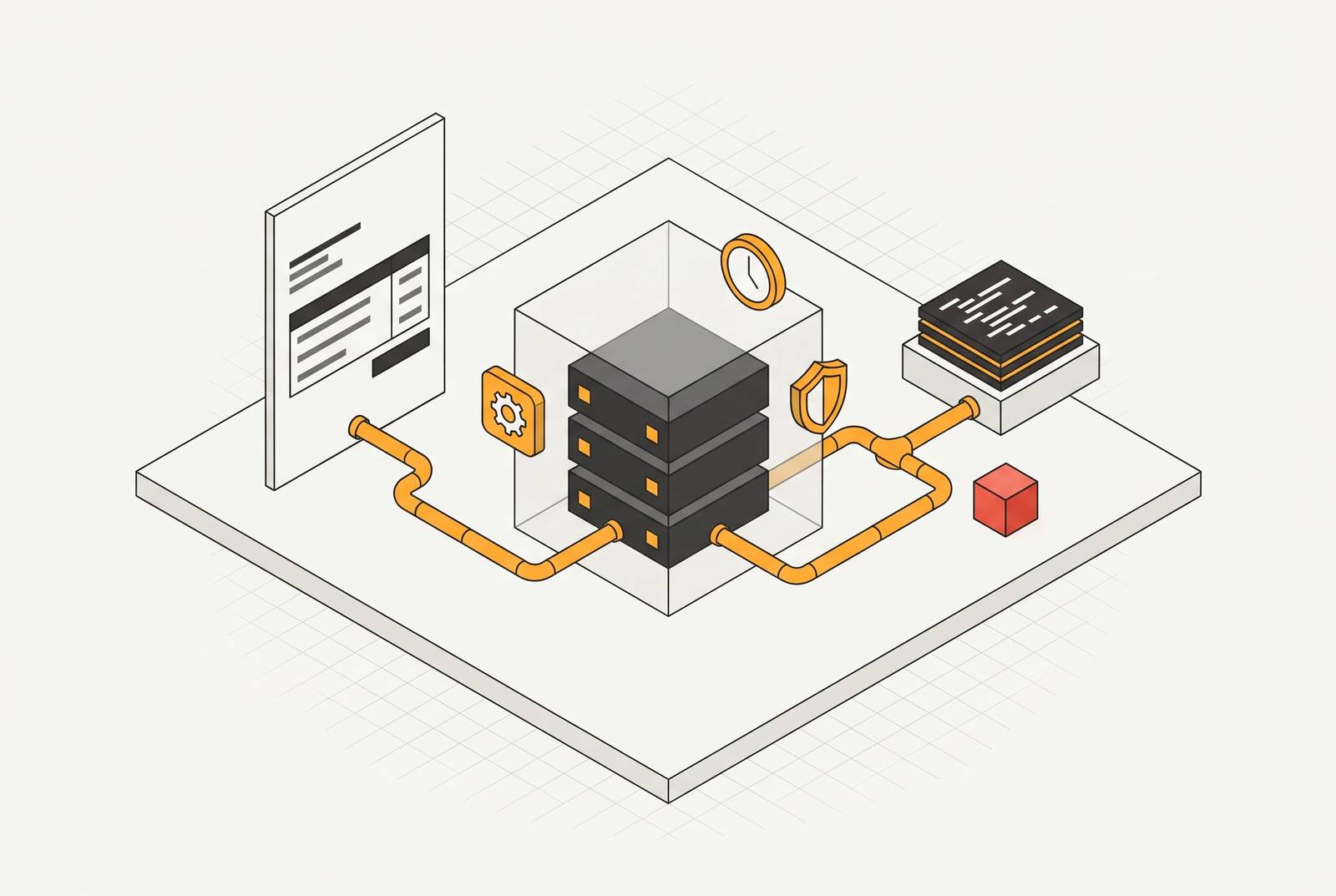
A bring-your-own API key cloud coding agent runner lets you run Claude Code or Codex without having to manage the infrastructure, while you pay for model usage through your own account. Boxes.dev is one such option. The essential distinction is that managed agent work has two costs, which are the model that reasons and the environment that executes. To know what spending to expect, you need to understand both costs, even when a subscription bundles them together.
Why your Anthropic or OpenAI bill splits into two distinct charges the moment a runner is managed for you
An unexpected agent bill raises a practical question about which part paid for the model and which paid for the machine. Those are different services. The model consumes tokens or draws down a subscription allowance, while the machine executes commands, holds the filesystem, and keeps the session alive between steps. A long-running session can consume both resources, but their charges need not grow together.
Local execution makes the second cost less visible because the developer supplies the laptop and its electricity. Managed execution makes that cost explicit. It may appear as a separate environment charge, be absorbed into a subscription tier, or accrue by the minute of active compute. Two costs therefore do not necessarily mean two invoices.
What the model bill actually covers, and why agent sessions consume it faster than chat
The amount an agent writes is a poor guide to its model bill. Reading can dominate the cost of a session. At each step, the agent re-sends the context built up so far, so the bill covers reading it again as well as the final code or explanation. A small change can therefore use a lot of the model when it comes out of a long conversation.
Cache reads reduce the price of that repetition. Unchanged context is billed at a small fraction of the input rate, but a long session can still accumulate a large volume of those reads. The brief’s example of a 58-minute cloud session on Opus 5.5 illustrates the gap. It produced little output but read enough cached context to cost $34.38 at API rates.
A flat-rate subscription constrains spending through its included allowance, whereas API pay-per-token billing charges for the accumulated consumption. Neither is interpretable from output length alone. How long a session runs, how much context it has, and how many turns it takes help explain why a small coding task can cost more than a one-shot chat.
What the environment bill covers — isolation, persistence, and parallelism as distinct line items
Compute isolation buys a separate execution boundary for each session. Its everyday value is operational as well as defensive. Separate filesystems and processes let agents work against the same repository without colliding over ports, databases, or working-tree state. A VM or sandbox also separates commands and dependency installs from other sessions and the developer’s local machine, although the credentials available inside that boundary remain a separate concern.
Session persistence buys continuity when the developer leaves. Closing a browser is not necessarily the same as ending execution, and preserving a conversation is not the same as preserving a running process. A self-managed VPS can provide persistence, but it transfers SSH hardening, unattended upgrades, firewall rules, and disk management to the team.
Parallelism buys simultaneous work with the existing model allowance by default. Subscription sessions can draw from one shared pool. Running three sessions in parallel reaches the weekly limit roughly three times as fast as running one. Compute-per-minute and ACU-style structures instead make concurrent work increase metered charges, which exposes the cost of additional capacity.
How do managed runners price Claude Code or Codex in the cloud with your own account?
Anthropic’s cloud sessions include model access and a well-equipped environment. Each session receives a fresh Ubuntu 24.04 VM with 4 vCPUs, 16 GB RAM, and 30 GB disk. Common language toolchains, Docker, PostgreSQL, and Redis are configured, with further dependencies available through a setup script. This execution environment lets the agent start an application, run tests, and exercise the full stack.
The subscription structure absorbs that environment cost but shares usage across sessions. Claude chat also draws from the same allowance. Parallel work and long tasks can use up the pool, leaving the team to wait, upgrade, or use API-rate usage credits. That overflow removes the subscription’s spending bound. Enterprise seats invert the arrangement, with no per-seat usage limit and every token billed at API rates under admin-set spend caps.
OpenAI Codex follows ChatGPT plan tiers rather than presenting the same purchasing structure as an independent environment provider. As of November 14, 2026, access is limited on Free and Go, full on Plus at $20/month, and available with higher limits on Pro. Cursor cloud agents use another subscription structure. Since October 12, 2026, the named plans are The X Subscription at the Premium tier, Super, Teams at a per-user monthly rate, and quote-only Enterprise.
With Boxes.dev, the environment is bought separately from model access. As of November 2026, its free trial includes box-hours, and paid tiers increase the included hours from a low entry rate through mid and high tiers. It supports Claude Code and Codex, with model access supplied through the user’s own plan or API key. That makes it a fit for teams seeking independent control of the two charges. The described workflow also allows switching among Claude Code, Codex, and Cursor without changing how the team works.
Native subscriptions suit buyers who want environment access absorbed into a plan, subject to its usage limits. A separate box-hours model shows how much the environment is used and leaves the model account separate.
Why the hidden cost in most managed-runner bills is not the model tier you chose but how the environment handles idle time
An always-on VPS or EC2 instance incurs charges whether an agent is working or the machine is empty. DigitalOcean bills a powered-off Droplet the same as a running one, so stopping it overnight does not produce the saving a developer might expect.
Subscription plans can incur a different kind of overnight loss. Scheduled tasks and loops fire at their intervals and re-send accumulated context while the developer is away. The visible symptom is a depleted allowance rather than an unexpectedly large infrastructure invoice.
Anthropic’s cloud sessions continue after a browser tab closes, but their VMs can pause after a few minutes of inactivity with files saved and later be reclaimed. Reopening then starts a fresh VM with the conversation and leaves the running subagent or shell loop behind. The earlier quota has already been consumed. Devin’s ACU model draws a different billing boundary by metering active autonomous work rather than wall-clock time spent waiting for a human response.
Practical controls that separate predictable agent spend from runaway bills
Engineering leads should control how much the model is used separately from how long the environment runs. One spending limit cannot govern both automatically. For routine model work, assign simple subagents to Haiku instead of Opus and lower the effort level with /effort. Keep CLAUDE.md short and move workflow-specific instructions into skills that load only when used. Idle MCP servers still count toward context, so visible activity is not the only source of repeated input.
For the environment charge, choose active-compute pricing where idle time costs nothing or close to it. Then use the advertised hourly rate to price the whole month. A small hourly charge on an always-on VM accumulates continuously, while sleep-capable, per-minute or box-hour environments better match intermittent work. Limit parallel sessions to what the team can review. Unreviewed pull requests consume allowance and compute without completing the delivery workflow.
The billing model should also follow the workload. For heavy daily use by one developer, a flat-rate Pro, Max, or Ultra subscription is almost always cheaper than API pay-per-token billing, provided work stays within the allowance and avoids paid overflow. Automation, CI pipelines, and scheduled tasks fit API or metered billing because usage follows how often they are triggered, and that frequency has a limit. Teams running many concurrent agents benefit from compute-per-minute pricing with per-workspace isolation. Shared-pool subscriptions instead confront the team with limits as parallel usage accumulates.
What the two-bill split means for security boundaries, credential handling, and audit at the enterprise level
The two charges also identify two security perimeters. The API key or subscription account controls the model perimeter, which governs model access and responses. SOC 2, training-data opt-out, and enterprise agreements deal with concerns about that service. They do not describe every command the execution environment permits. A model agreement is therefore not a substitute for understanding the runner.
The VM or sandbox configuration governs the execution perimeter. It determines what the agent can run, which credentials it can reach, which networks it can call, and what persists after the session ends. Most hosted agents process repository context on vendor-shared infrastructure. For IP-sensitive or regulated codebases, deployment inside the team’s own cloud boundary can keep code and conversation history within that perimeter.
An issue or alert can contain external text that attempts to redirect the agent, making prompt injection a risk even when the model account is properly controlled. The supported response is to treat external content as data rather than instructions, run agents without production credentials, and redact secrets from logs. Those controls restrict what an induced action can reach or expose. Enterprise audit must distinguish model-account controls from execution controls rather than treating one invoice or agreement as evidence for both.
Reading your bill as a signal about how your agents are actually working
A model bill growing faster than task volume is a diagnostic signal. Context may be accumulating across long sessions, subagents may be proliferating without scope limits, or scheduled tasks may be repeatedly sending full histories. The invoice alone cannot show which of those causes is at work. Model consumption per task type gives engineering leads a way to connect the charge to the workflow producing it.
A flat or slowly growing charge alongside high output is consistent with agents sleeping between tasks and compute tracking active work. Output still needs a useful definition. Reviewable pull requests and merged work are better evidence of progress than agent activity alone, especially when a rising bill is not accompanied by more completed changes.
Teams connected to a coding agent went from 21 weekly PRs to 65 over two years, while teams without one barely moved. Linear’s official changelog also says its internal workflow resolves only a minority of incoming bug reports, mostly on the first pass. The remaining majority still reach an engineer. Higher PR volume therefore does not remove the need to understand where delegation succeeds.
The next step is to track how much of the model each task type uses separately from what the environment costs for each active session. Compare both with reviewable PRs and merged results. Then ask what the ratio between the two charges reveals about the work, whether repeated reasoning dominates, compute remains allocated between tasks, or productive sessions are being interrupted. That evidence identifies which workloads fit a subscription, which fit metered execution, and which need their agent workflow corrected before more budget is assigned.